AI Ethics

What Is AI Ethics?

Ethical considerations of AI in education

12 Articles

Making AI chatbots friendly leads to mistakes and support of conspiracy theories
📰Article

Making AI chatbots friendly leads to mistakes and support of conspiracy theories

Skip to main content Skip to navigation Skip to navigation Warm chatbots are 30% less accurate and 40% more likely to support false beliefs, the study found. Photograph: Thai Liang Lim/Getty Images View image in fullscreen Warm chatbots are 30% less accurate and 40% more likely to support false beliefs, the study found. Photograph: Thai Liang Lim/Getty Images Friendly AI chatbots more likely to support conspiracy theories, study finds Chatbots programmed to respond warmly even cast doubts on Apollo moon

Auto-Discovery·Apr 29
AI gives more praise, less criticism to Black students
📰Article

AI gives more praise, less criticism to Black students

Skip to content Credit: Getty Images The Hechinger Report covers one topic: education. Sign up for our newsletters to have stories delivered to your inbox. Consider becoming a member to support our nonprofit journalism. Get important education news and analysis delivered straight to your inbox Choose as many as you want (Required) Weekly Update Elementary to High School Higher Education Proof Points Climate Change Early Childhood Email (Required) Δ As schools introduce artificial intelligence into the classroom, a new analysis

Auto-Discovery·Apr 27
Generative AI Makes Good Research Better, But Demands Human Discipline
📰Article

Generative AI Makes Good Research Better, But Demands Human Discipline

Skip to main content Skip to search YU News Search Offset Search Offset News Channel YU News Featured News Faculty News Schools & Depts Alumni Katz Lieberman Revel Straus Sy Syms Wurzweiler Libraries News Press Releases Publications Contact Alumni Katz Lieberman Revel Straus Sy Syms Wurzweiler Libraries News Generative AI Makes Good Research Better, But Demands Human Discipline Apr 24, 2026 By: daviddefusco Sy Syms Assistant Professor Travis Oh is a co-author of the report: New Tools, New Roles: A

Auto-Discovery·Apr 24
Letting AI Do Your Work Erodes Your Confidence, According to a New Study
📰Article

Letting AI Do Your Work Erodes Your Confidence, According to a New Study

Health AI Letting AI Do Your Work Erodes Your Confidence, According to a New Study ADD TIME ON GOOGLE by Angela Haupt Apr 16, 2026 1:00 PM CUT Andriy Onufriyenko—Getty Images by Angela Haupt Apr 16, 2026 1:00 PM CUT As AI becomes a daily work tool , the real risk may not be losing our intelligence—but losing confidence in our own thinking.

Auto-Discovery·Apr 16
AI Use Appears to Have a "Boiling Frog" Effect on Human Cognition, New Study Warns
📰Article

AI Use Appears to Have a "Boiling Frog" Effect on Human Cognition, New Study Warns

Illustration by Tag Hartman-Simkins / Futurism. Source: Getty Images Sign up to see the future, today Can’t-miss innovations from the bleeding edge of science and tech Email address Sign Up Thank you! In a new study , researchers claim to provide the first causal evidence that leaning on AI to assist with “reasoning-intensive” cognitive labor — mental tasks ranging from writing to studying to coding to simply brainstorming new ideas — can rapidly impair users’ intellectual ability and willingness to

Auto-Discovery·Apr 14
For some UF researchers, the race to build AI is outpacing efforts to make it fair
📰Article

For some UF researchers, the race to build AI is outpacing efforts to make it fair

Skip to Content , Navigation , or Footer . About Board of Directors Contact Classifieds Advertise Issues Store Apartments Near UF Donate Now We inform. Sunday, May 03, 2026 News For some UF researchers, the race to build AI is outpacing efforts to make it fair Experts weigh in on how bias can emerge in data, design and context UFIT Research Computing Senior Director Erik Deumens leads a tour of UF's supercomputer, HiPerGator, on Wednesday, Dec.

Auto-Discovery·Apr 13
An illustrated guide to resisting "AI is inevitable" in education
📰Article

An illustrated guide to resisting "AI is inevitable" in education

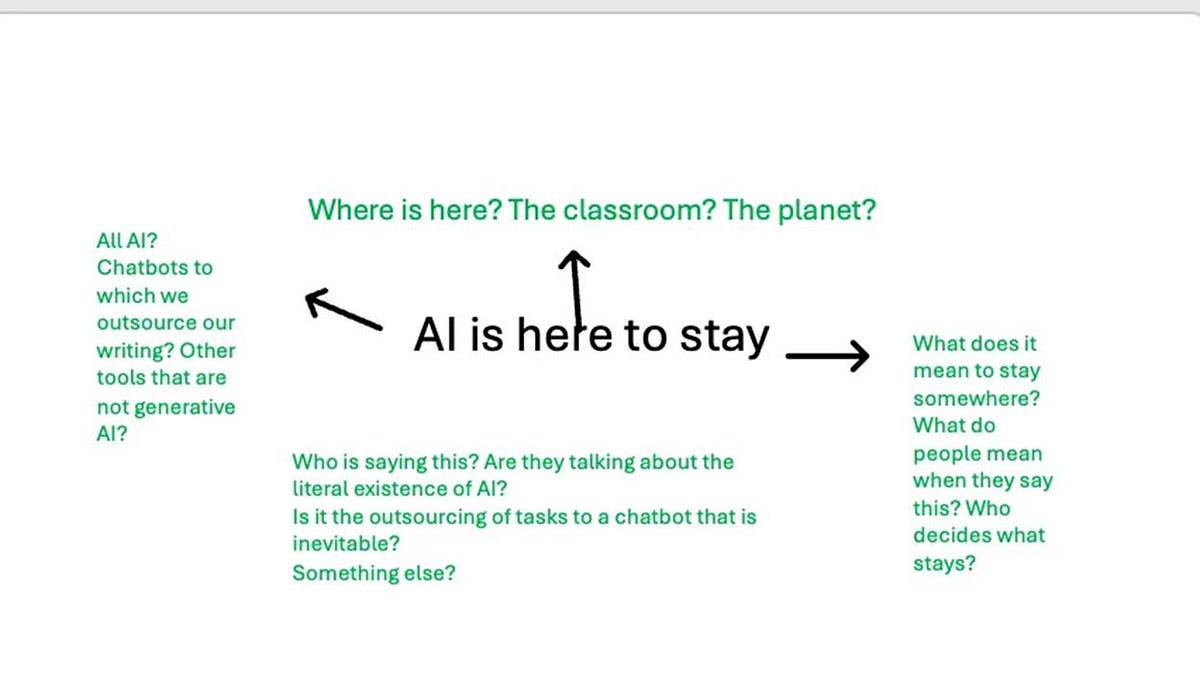
Subscribe Sign in An illustrated guide to resisting "AI is inevitable" in education Enough, enough, enough Benjamin Riley Apr 13, 2026 174 22 47 Share 1. Ask the AI-in-education enthusiast to clarify their premise. ( Slide created by Jane Rosenzweig, Director of Harvard College Writing Center ) 2. Ask the AI-in-education enthusiast if they are familiar with recent research indicating that generative AI leads to widespread “cognitive surrender.” Shot: “Conceptually distinct from cognitive offloading, which involves strategically outsourcing a discrete

Auto-Discovery·Apr 13
Ethical considerations in the integration of artificial intelligence into education: a novel deep neural network framework for predicting transparency scores
📰Article

Ethical considerations in the integration of artificial intelligence into education: a novel deep neural network framework for predicting transparency scores

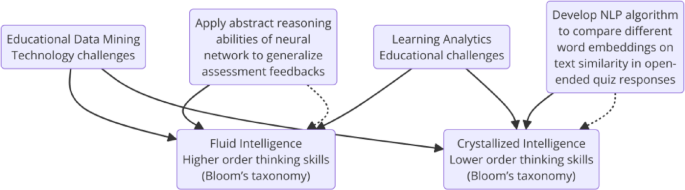
Skip to main content Thank you for visiting nature.com. You are using a browser version with limited support for CSS. To obtain the best experience, we recommend you use a more up to date browser (or turn off compatibility mode in Internet Explorer). In the meantime, to ensure continued support, we are displaying the site without styles and JavaScript. Ethical considerations in the integration of artificial intelligence into education: a novel deep neural network framework for predicting transparency scores Download

Auto-Discovery·Apr 13
Google's AI Overviews spew false answers per hour, bombshell study reveals
📰Article

Google's AI Overviews spew false answers per hour, bombshell study reveals

Google’s AI-generated search results are spewing out tens of millions of inaccurate answers per hour – even as the tech giant siphons visitors and ad revenue from cash-strapped news outlets, according to a bombshell analysis. To test the accuracy of Google’s AI Overviews, startup Oumi reviewed 4,326 Google search results generated by Google’s Gemini 2 model and the same number of results generated by its more advanced Gemini 3 model.

Auto-Discovery·Apr 10
Gen Z Increasingly Skeptical of — And Angry About — Artificial Intelligence
📰Article

Gen Z Increasingly Skeptical of — And Angry About — Artificial Intelligence

Explore Immigration Bright Spots zero2eight science of reading Math AI STEM Support The 74 and stories like this one. News Gen Z Increasingly Skeptical of — And Angry About — Artificial Intelligence New Gallup survey of 14- to 29-year-olds shows growing misgivings from a generation poised to enter higher education and a workforce changed by AI. (Gallup) By Jo Napolitano April 9, 2026 Education news and commentary, delivered right to your inbox.

Auto-Discovery·Apr 9
'Cognitive Surrender' Is a New and Useful Term for How AI Melts Brains
📰Article

'Cognitive Surrender' Is a New and Useful Term for How AI Melts Brains

Skip to content Artificial Intelligence ‘Cognitive Surrender’ Is a New and Useful Term for How AI Melts Brains Once you learn this term, you will unfortunately see it everywhere. By Mike Pearl Published April 5, 2026, 9:47 am ET Reading time 3 minutes © vladimir soldatov via Getty Images Read Later Read Later Comments (44) Kyle Orland of ArsTechnica wrote a blog post about the term “cognitive surrender” on April 3.

Auto-Discovery·Apr 5

Frequently Asked Questions

What are AI Ethics tools within an educational context?
AI Ethics tools in education are resources, frameworks, and software designed to help users identify, analyze, and mitigate potential ethical risks associated with AI adoption. They address concerns like bias, privacy, fairness, and accountability when AI is used in learning, assessment, or administrative processes.
Why is understanding AI Ethics crucial for educators and students?
Understanding AI Ethics is crucial because AI tools significantly impact learning, assessment, and administrative functions. It ensures responsible AI integration, protecting student privacy, promoting fairness, and preventing algorithmic bias in educational outcomes. This knowledge empowers users to critically evaluate and advocate for ethical AI use.
What specific ethical concerns do AI tools raise in education?
Key concerns include algorithmic bias in assessment or content recommendation, student data privacy, lack of transparency in AI decision-making, potential for discrimination, and the impact on human interaction. These issues can inadvertently disadvantage certain student groups or compromise trust in educational systems.
How can individuals or institutions promote ethical AI use in education?
Promoting ethical AI involves developing clear policies, implementing data privacy safeguards, conducting bias audits, fostering transparency, and providing training on AI ethics. Encouraging open dialogue among stakeholders – students, educators, and developers – about responsible AI integration is also vital.
Who should be involved in discussions about AI Ethics in education?
Everyone in the educational ecosystem should be involved: students, educators, administrators, parents, AI tool developers, and policymakers. A multi-stakeholder approach ensures diverse perspectives are considered, leading to more comprehensive and effective ethical guidelines and practices for AI integration.
Can students play a role in advocating for ethical AI in their learning environment?
Absolutely. Students are critical stakeholders and can advocate by questioning AI tool decisions, understanding data privacy, participating in policy discussions, and reporting concerns about fairness or bias. Empowering students to be informed digital citizens fosters a more ethical and equitable AI-powered learning environment.